What began as a modest indie project now stands among the most influential games ever made. Over 350 million units had been sold on different platforms, a number unmatched by nearly every title before it. Sales alone, though, cannot fully represent how profoundly Minecraft altered player creativity. It has implications beyond earnings for the industry as a whole: not only video game creativity and gameplay design, but also digital culture and the evolution of the modern gaming community.
What keeps Minecraft widely reachable is how well it works on different systems. From phones to computers to gaming consoles, players join the same worlds without limits. That flexibility has positioned it among the best cross-platform multiplayer games.
Minecraft’s influence extends well past the game itself. It has become a constant presence on YouTube and streaming platforms, where creators document large-scale builds, long-term survival worlds, technical experiments, and multiplayer servers.
Quick Overview of What Minecraft Is
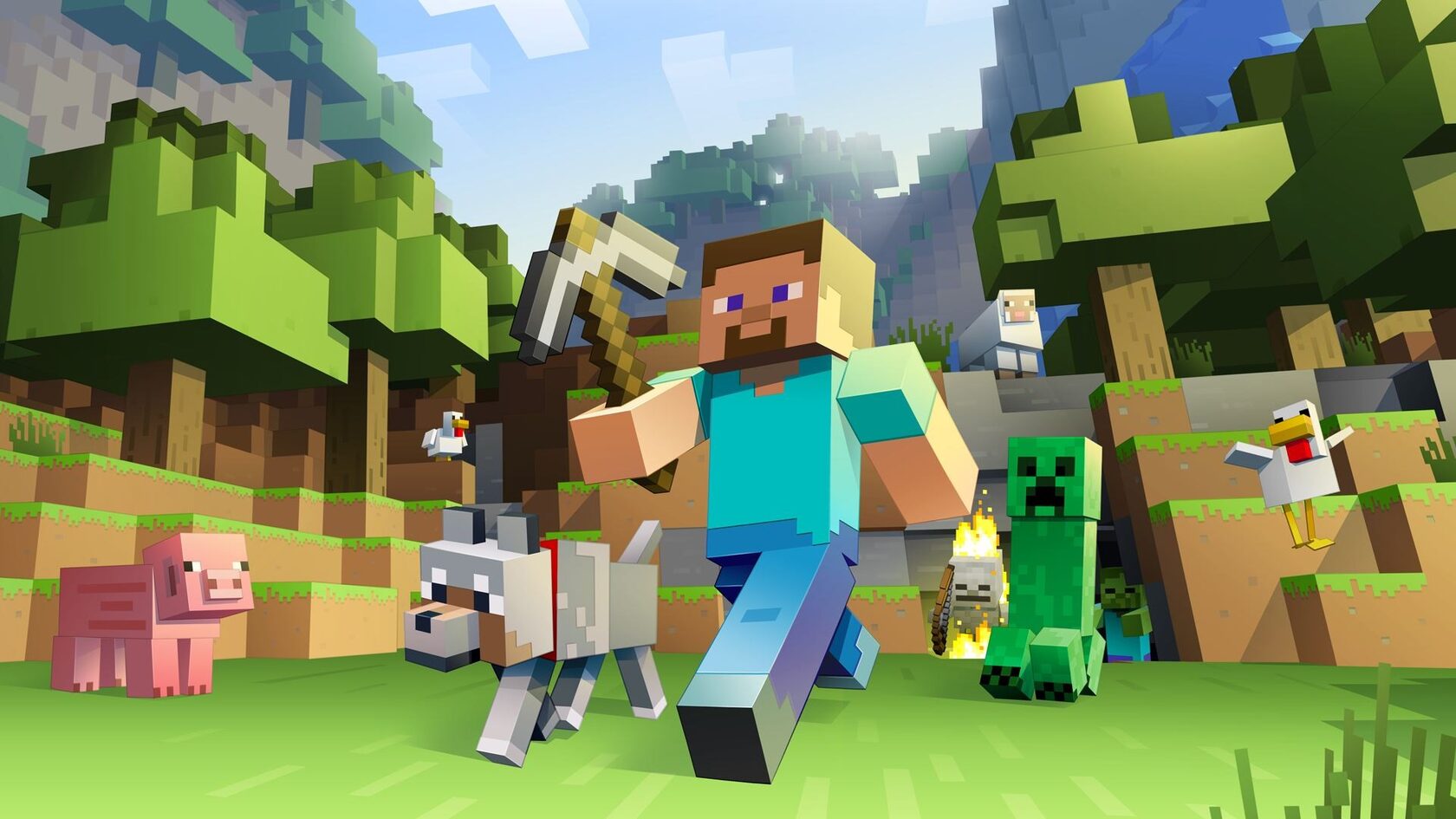
Minecraft is a sandbox survival game where players interact with a fully destructible, block-based world. The environment is procedurally generated. Every new world is different, with natural features such as mountains, caves, oceans, and villages forming automatically. Players gather materials like wood, stone, and minerals to create tools, weapons, and building blocks that allow them to survive and build the world itself.
Gameplay centers on two main modes:
- In Survival mode, players manage health and hunger while defending themselves from hostile mobs. It turns exploration and construction into a gradual, resource-driven process.
- Creative mode gives players unlimited materials and the ability to fly. With limitations being gone, it’s easier to shift the focus entirely to building and design.
These simple mechanics define the genre and explain what makes Minecraft so popular: a low barrier to entry with systems flexible enough to support many different play styles.
The History of Minecraft’s Rise to Popularity
Indie Origins and Early Experimentation (2009–2010)
What started it all? A solo effort by Markus “Notch” Persson, then building modest browser-based prototypes. Drawing ideas from niche games such as Dwarf Fortress and Infiniminer, his approach emphasized freedom over finished graphics or fixed missions. When the initial alpha appeared online in May 2009, tech communities passed it around. Curious users showed up looking for experimentation, modding, and systems-driven gameplay.
Community Growth and YouTube Acceleration (2010–2012)
Minecraft’s popularity accelerated as players began documenting their worlds online. Through videos, some of the first YouTubers highlighted survival challenges and complex constructions, multiplayer servers, and transforming solo sessions into shared viewing experiences. Around then, the game moved beyond its underground roots, becoming something many people knew about, part of broader pop culture.
What made the format work on screen was its loose yet focused flow, moments shaped by choice. As a result, Minecraft became a foundational game for gaming content creation, helping define how YouTube and streaming platforms would engage with sandbox titles.
Official Release and Leadership Transition (2011–2014)
In late 2011, Minecraft launched its complete 1.0 version, just as more people around the world began playing regularly. Not long afterward, Persson reduced his role in day-to-day updates, handing control to Jens “Jeb” Bergensten. With fresh guidance at the helm, growth carried on without straying from early creative principles.
Microsoft Acquisition and Global Expansion (2014–2018)
In 2014, Microsoft acquired Mojang and the Minecraft intellectual property for $2.5 billion, placing it among the most expensive game acquisitions. Some worried creativity might suffer under corporate ownership; however, the team kept building much like before. Instead of big changes, efforts slowly shifted to syncing systems and opening play options across more platforms. During this era, Bedrock Edition emerged, turning Minecraft into a genuinely cross-platform game, connecting users across consoles, computers, and phones within identical virtual environments.
Long-Term Support, Visual Evolution, and Modern Relevance (2019–Present)
Game updates keep arriving at no cost, gradually improving worlds, systems, and speed. Lighting upgrades such as RTX appeared first, followed later by Vibrant Visuals, both of which brought fresh graphics while preserving the blocky look users knew. Though technology shifted, the core feel remained untouched.
The Simplicity and Accessibility of Minecraft
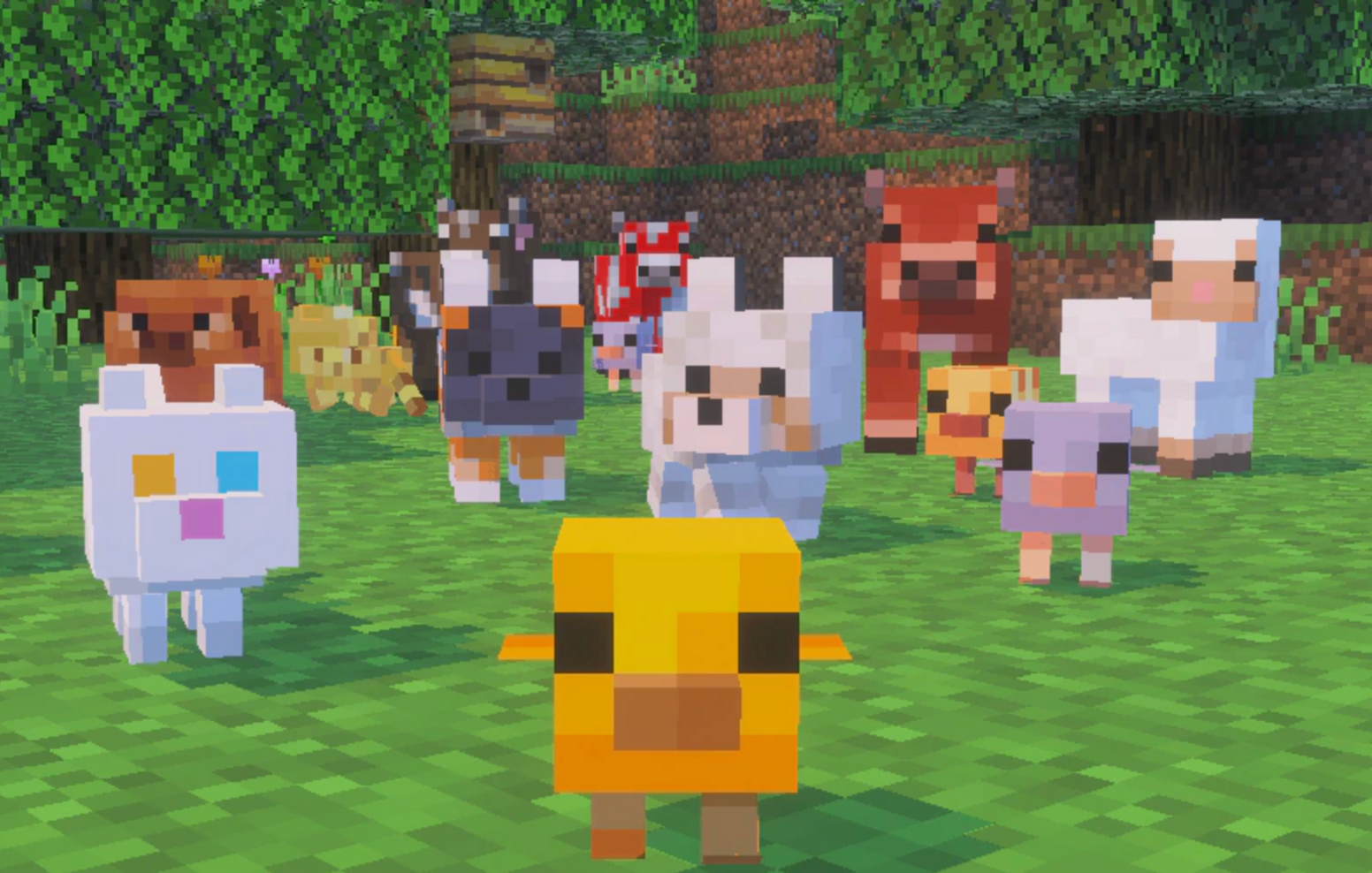
Starting out feels natural in Minecraft because almost anyone can begin playing right away. Its simple design means new users quickly understand how it works, without confusion slowing them down. Simple video game art helps keep things clear instead of overwhelming attention with details.
ʼ
Children often find these activities satisfying since they match early impulses to shape something from nothing. Observers point out that the game connects deeply with a human tendency to assemble and test ideas freely. Like stacking Lego, this virtual space allows instant decisions within open-ended surroundings lacking rigid rules.
But simplicity is not to be read as shallowness. Beneath those basic mechanics lies a depth that keeps people who are more experienced with the game engaged for years. For an adult who returns to or discovers Minecraft later, the systems also incentivize planning, problem-solving, and iterative mastery.
Multiplayer and Social Interaction
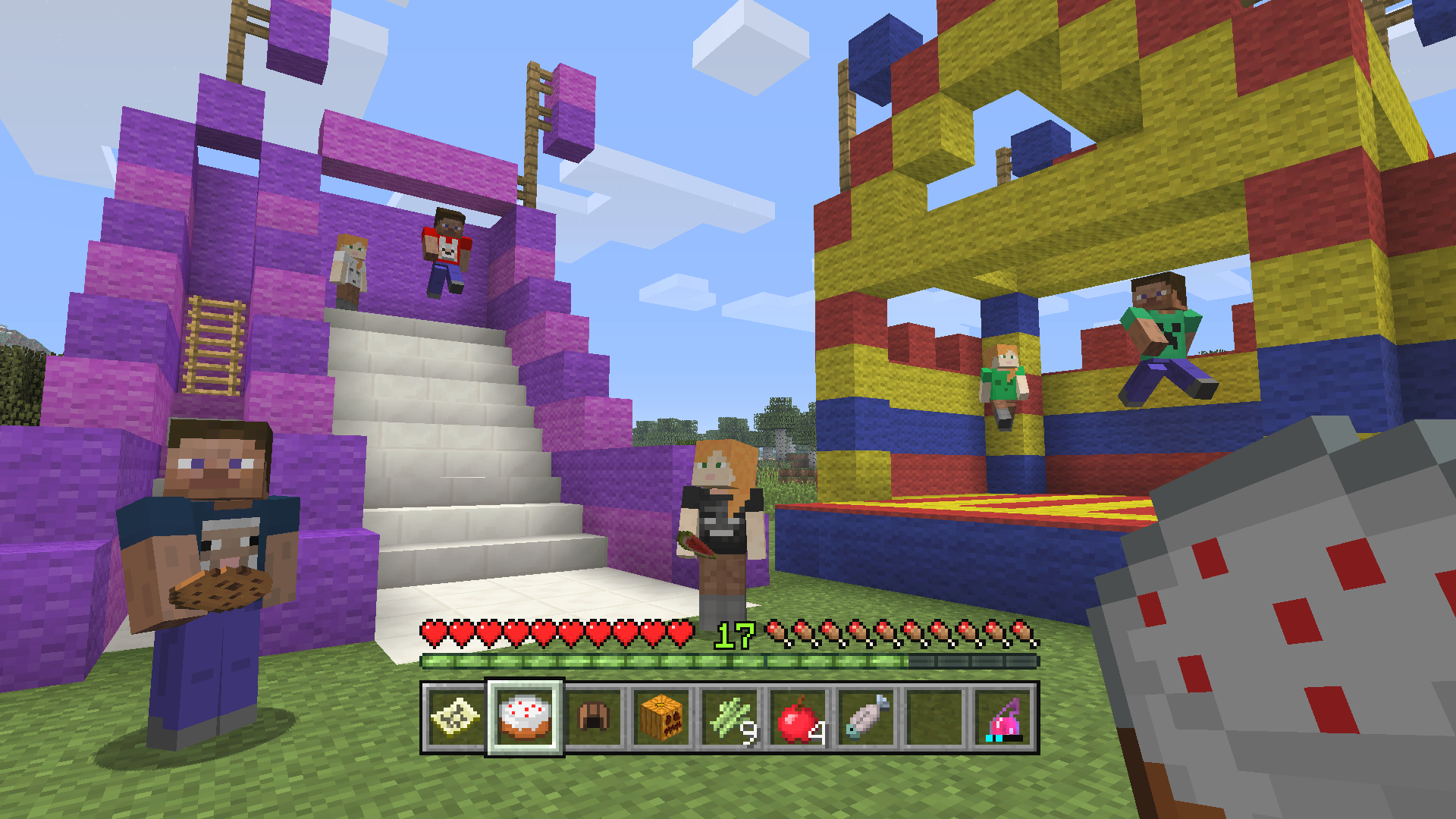
The game is available on PC (Java and Bedrock Editions), consoles such as PlayStation, Xbox, and Nintendo Switch, as well as mobile devices. The title, with its Bedrock Edition, supports Minecraft cross-platform gameplay, which means that across systems, users will be able to coexist within the same world.
Strong Community and User-Generated Content
Community creations also influence official development. Mod ideas, building techniques, and server mechanics go back into updates, sometimes giving new features their final expression as well. The feedback loop lets one learn that Minecraft’s popularity is sustained instead of peaking. And the game grows, not only through studio choices, but also through watching how the players modify and experiment. It also reflects broader game development trends that prioritize adaptability and long-term player involvement.
Much of that play-based development comes to light on YouTube and Twitch, where Minecraft remains one of the most consistently watched games. Certain formats dominate viewership. Large-scale building and survival series are attention-getting because they happen very slowly. Technical content (focused on redstone automation, optimization, and in-game engineering) is also widely watched, since it reveals how far the game’s simple mechanics can be pushed.
Constant Updates and Long-Term Support
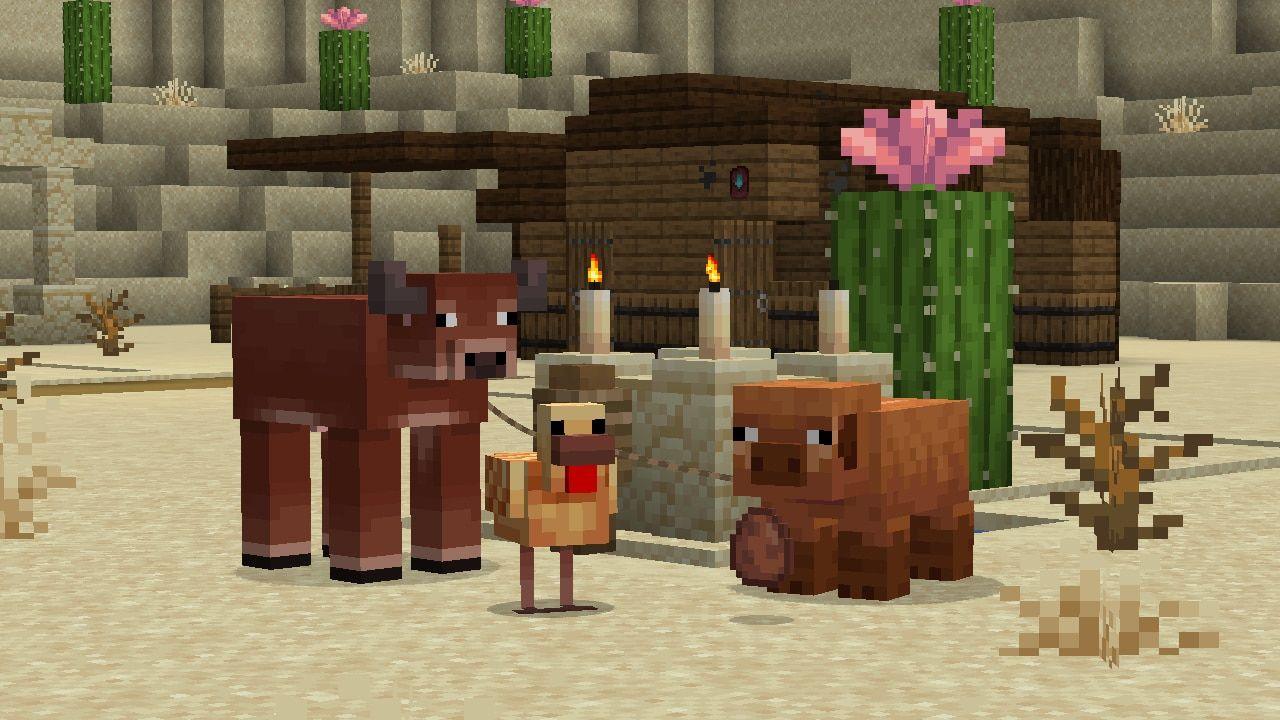
We already mentioned that many dev decisions are influenced by the players themselves. Still, we must once again emphasize that Minecraft is sustained through regular updates released by Mojang under Microsoft’s stewardship. These updates expand the game with new biomes, mobs, mechanics, and technical improvements, all delivered free to existing players.
In recent years, Mojang has adjusted its strategy to deliver content more frequently. Alongside biome and gameplay additions, visual updates have become more prominent. In 2025, the Chase the Skies update brought Vibrant Visuals to Bedrock Edition, an optional graphical refresh that included dynamic lighting, shadows, reflections, and atmospheric effects to update the game’s look without the need for high-end hardware. Java Edition support is planned for a later release. These updates keep the game technically up to scratch, even as the game still retains its original look.
Educational Value of Minecraft
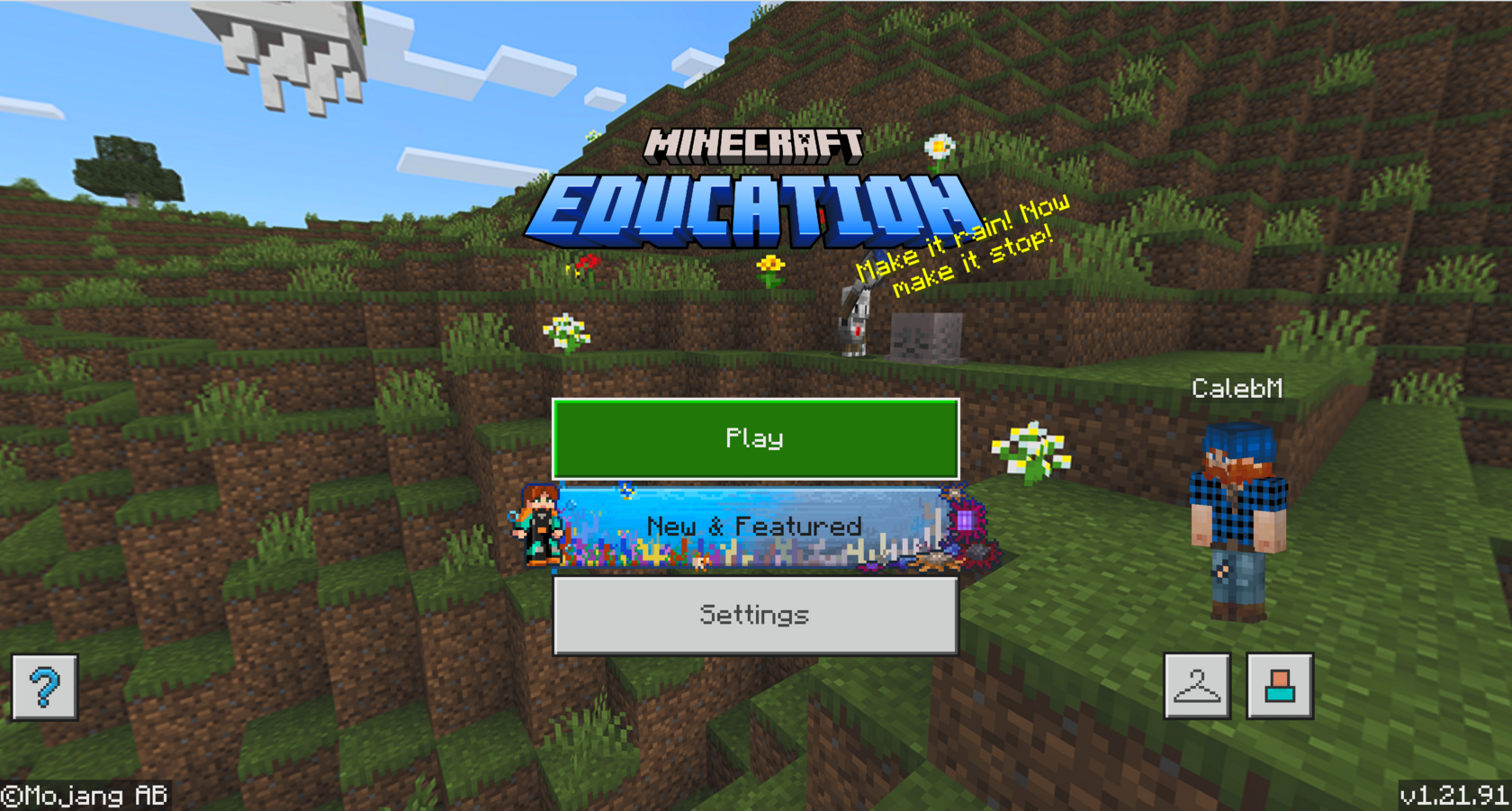
Far from just a game, Minecraft now supports teaching in schools thanks to an adapted format known as Minecraft Education Edition. Learning tasks built around it appear in lessons covering math, art, reading, science, and even history. A close look at published studies found learners more eager to participate when working inside Minecraft’s open-world spaces. Communication among peers strengthens as they plan and build together. Motivation rises when challenges feel meaningful within the block-based environment.
And it’s not the end.
- Remote learning support during the pandemic. During COVID-19 lockdowns, teachers used Minecraft to maintain interactive learning in remote classrooms.
- Curriculum-aligned teaching tools. Minecraft Education Edition provides ready-made lesson plans and classroom tools aligned with core subjects. Teachers use the game to explain abstract concepts through hands-on digital activities.
- Development of logic and planning skills. Gameplay encourages logical reasoning, resource management, and structured planning. Integrated coding tools allow students to explore programming fundamentals using block-based or text-based approaches.
Cultural Impact of Minecraft
Minecraft’s influence extends far beyond gameplay. In September 2019, The Guardian named Minecraft the best video game of the 21st century to date, while Polygon later described it as the most important game of the 2010s. In 2020, it was officially inducted into the World Video Game Hall of Fame due to its long-term cultural and industry significance on a global scale.
Online platforms have provided a boost to the visibility of the game. YouTube, Reddit, and Twitch served as central players in the success of Minecraft; studies out at the University of Pennsylvania indicated that an estimated one-third of players first discovered the game online, most effectively via videos. By 2012, millions of Minecraft videos were available online, while by December 2021, worldwide Minecraft views on YouTube had crossed 1 trillion.
Minecraft has become thoroughly integrated into popular culture and the media as well. It has spawned books, toys, licensed goods, worldwide fan meetings, and major conventions like Minecon (then, Minecraft Live). And the game has been cited in film, TV, music, and other video games, while its characters and mechanics have also appeared in crossover titles like Super Smash Bros. Ultimate. In 2025, A Minecraft Movie set new opening week records for a video game adaptation, once again extending the reach of the brand’s pop culture.
Why Minecraft Is Still Popular Today
Still going strong, Minecraft fits the way people like to build, explore, and hang out together. Easy rules make it quick to start, yet deeper features give room to grow skills slowly. Fresh additions arrive often, but never change what makes it feel like home. Available nearly everywhere, it links players across devices instead of locking them in one place.
What fans make themselves—live multiplayer worlds, classroom lessons, and constant visibility on video sites keep shifting how we see and use the game. Still going strong, Minecraft shifts shape, pulling in fresh ways to play, tools, and how people use it. Not one feature makes it last, but this constant change keeps folks asking if it’s the top game, years past its start.
Lasting creations need steady hands, room to grow, and careful handling; just like what you see in Minecraft. At Argentics, we believe simplicity is not a limitation, yet as solid ground to stand on. If you’re exploring game development or interactive digital experiences and want to build something sustainable and player-focused, our team is ready to help. Contact Argentics to turn thoughtful ideas into well-crafted experiences that respect both players and the medium itself.
Let’s build something new and sturdy, block by block!
FAQ
Yes. Minecraft is officially recognized as the best-selling video game of all time.
As of early 2026, it has sold over 350 million copies across all platforms. It became the first game in history to cross the 300 million mark back in late 2023 and has continued to widen its lead ever since.
It depends on your definition. While Minecraft is the best-selling paid game, it is not always the most-played game when compared to “Free-to-Play” giants.
This is a “top-voted” thread on Steam forums every month. Since Microsoft owns Mojang, they keep the game on the Microsoft Store and their own Minecraft Launcher to avoid giving Valve a 30% cut of the profits.
You can still add Minecraft to your Steam Library as a “Non-Steam Game” to use the Steam Overlay and your Steam Deck controller configurations.
This is the #1 “leak” theory on Reddit. While Mojang hasn’t officially confirmed it, the community is convinced that after the Overworld and Nether updates, the End is next. Currently, players use mods like BetterEnd to fill that void.